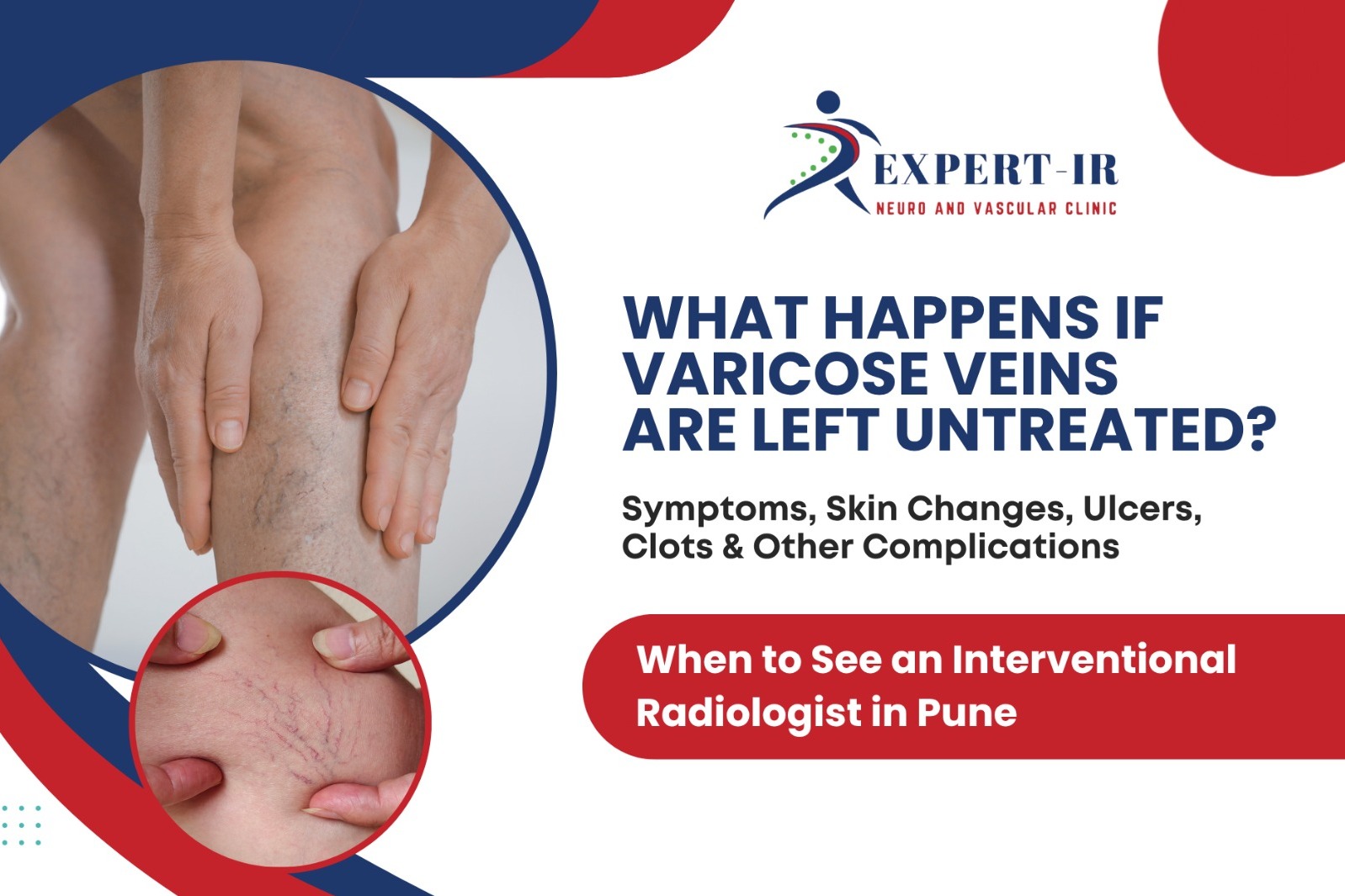
What Happens If Varicose Veins Are Left Untreated?
Symptoms, Skin Changes, Ulcers, Clots & Other Complications
When to See an Interventional Radiologist in Pune
Varicose veins rarely stay the same if left alone. What starts as a cosmetic annoyance tends to
progress, sometimes slowly, sometimes faster than expected.
The problem begins with weakened vein valves, letting blood pool instead of moving back
toward the heart properly. Left untreated, that pooling continues, and pressure builds steadily
within the vein and surrounding tissue over months, sometimes years.
Symptoms usually get worse, not better. Mild aching or heaviness can turn into persistent
pain, swelling, and cramping, especially after standing or sitting for long stretches. What used
to be occasional discomfort often becomes something felt daily.
Skin changes tend to follow next. Constant pressure darkens and thickens skin around
affected veins, sometimes causing itching, a condition called venous eczema. Ignored long
enough, this can progress toward actual skin breakdown.
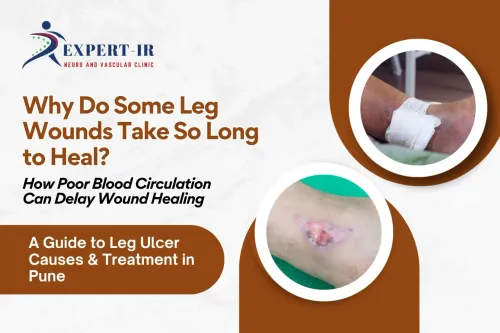
Venous ulcers mark a more serious stage. Chronic pressure eventually damages tissue enough
that wounds form, usually near the ankles, and these rarely heal well without treating the
underlying vein problem first.
Blood clots are a real risk too. Superficial thrombophlebitis, clotting inside the varicose vein
itself, causes localized pain and swelling, and can occasionally progress toward deeper vein
involvement if nothing's done.
Bleeding becomes more likely as well, since these veins sit close to the surface and can
rupture with minor trauma, sometimes bleeding more than a small injury would suggest.
Catching this early prevents most of what follows. An experienced varicose veins specialist
in Pune assesses vein function through imaging, identifying reflux severity before
complications set in.
Schedule a consultation with Dr. Santosh Patil to address varicose veins before complications
progress.
Symptoms, Skin Changes, Ulcers, Clots & Other Complications
When to See an Interventional Radiologist in Pune
Varicose veins rarely stay the same if left alone. What starts as a cosmetic annoyance tends to
progress, sometimes slowly, sometimes faster than expected.
The problem begins with weakened vein valves, letting blood pool instead of moving back
toward the heart properly. Left untreated, that pooling continues, and pressure builds steadily
within the vein and surrounding tissue over months, sometimes years.
Symptoms usually get worse, not better. Mild aching or heaviness can turn into persistent
pain, swelling, and cramping, especially after standing or sitting for long stretches. What used
to be occasional discomfort often becomes something felt daily.
Skin changes tend to follow next. Constant pressure darkens and thickens skin around
affected veins, sometimes causing itching, a condition called venous eczema. Ignored long
enough, this can progress toward actual skin breakdown.
Venous ulcers mark a more serious stage. Chronic pressure eventually damages tissue enough
that wounds form, usually near the ankles, and these rarely heal well without treating the
underlying vein problem first.
Blood clots are a real risk too. Superficial thrombophlebitis, clotting inside the varicose vein
itself, causes localized pain and swelling, and can occasionally progress toward deeper vein
involvement if nothing's done.
Bleeding becomes more likely as well, since these veins sit close to the surface and can
rupture with minor trauma, sometimes bleeding more than a small injury would suggest.
Catching this early prevents most of what follows. An experienced varicose veins specialist
in Pune assesses vein function through imaging, identifying reflux severity before
complications set in.
Schedule a consultation with Dr. Santosh Patil to address varicose veins before complications
progress.
Keywords