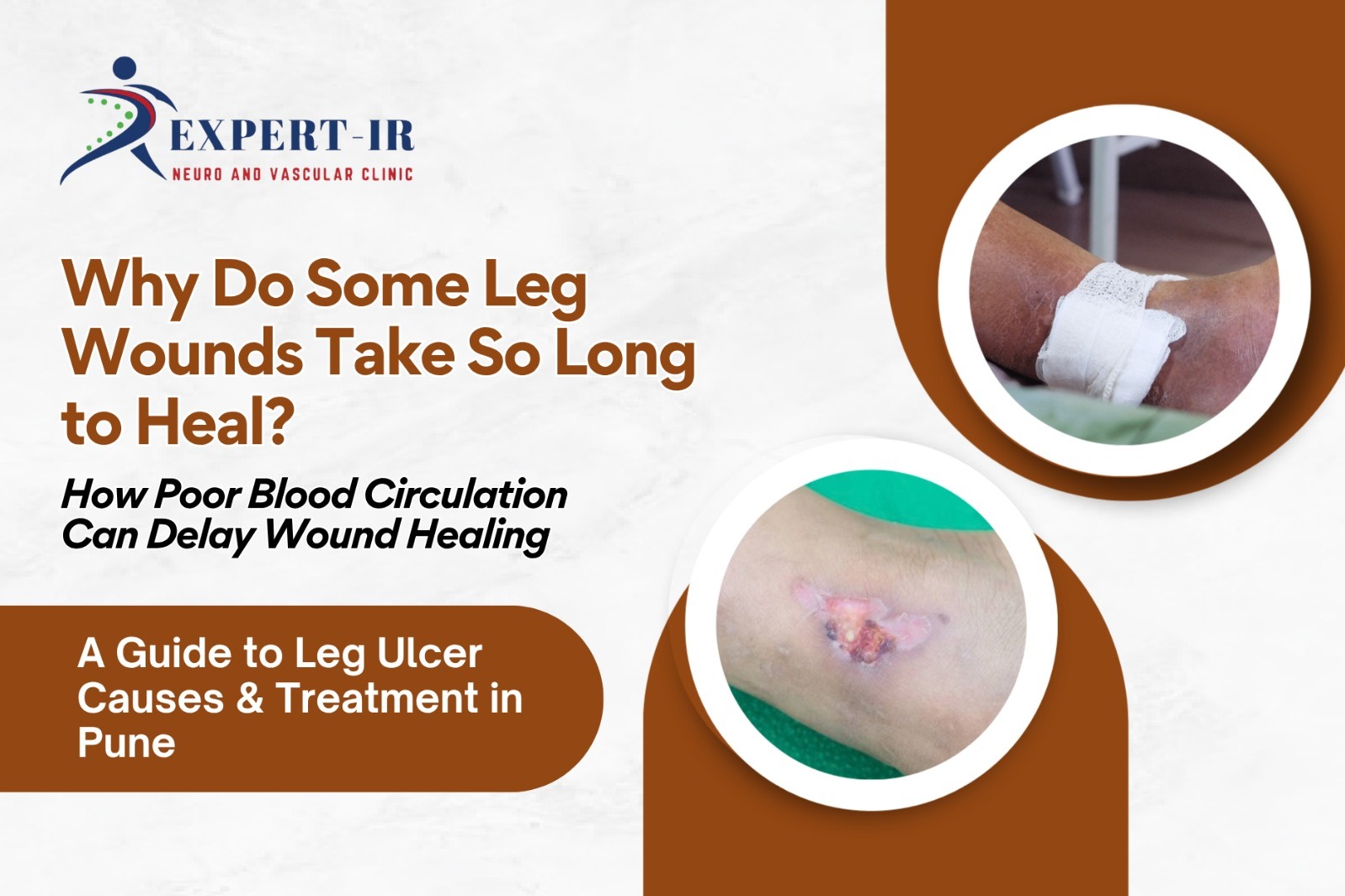
Why Do Some Leg Wounds Take So Long to Heal?
How Poor Blood Circulation Can Delay Wound Healing
A Guide to Leg Ulcer Causes & Treatment in Pune
Most stubborn leg wounds trace back to poor circulation, even though it's rarely the first
thing that comes to mind.
Skin needs a steady flow of oxygen and nutrients, delivered through blood. When that flow
weakens, blood struggling to reach the legs or failing to drain back out properly, tissue repair
falls behind. A wound that should close in a week ends up lingering for a month, sometimes
longer.
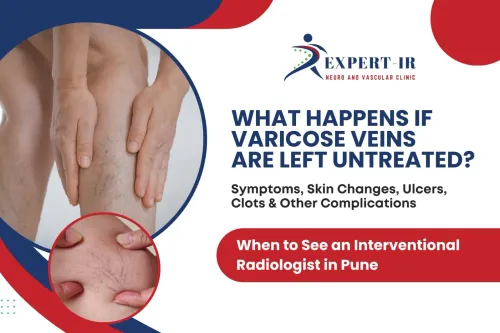
Venous insufficiency explains a lot of these cases. Vein valves weaken over the years, letting
blood pool low in the legs instead of moving back up. Pressure builds where it shouldn't, and
eventually skin gives way, usually near the ankles, into an ulcer that doesn't respond to
typical wound care.
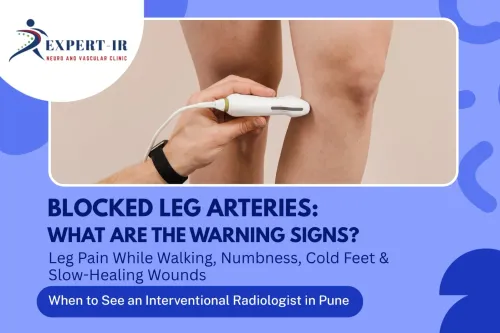
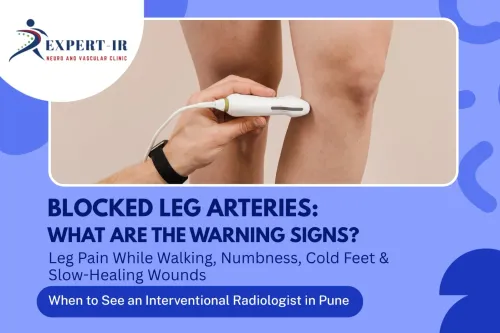
Arterial insufficiency gets there differently. Arteries narrow, sometimes shut off completely,
and oxygen-rich blood stops reaching feet and lower legs properly. Tissue starved this way
turns fragile fast, and these ulcers tend to hurt more, heal slower too, compared to venous
ones.
Diabetes tends to make things worse across the board. Nerve damage means injuries go
unnoticed longer, and healing capacity drops at the exact same time circulation's already
struggling.
Fixing the ulcer by itself rarely solves the real issue. Whatever's restricting circulation needs
attention too, or the wound just comes back, sometimes worse than before.
That's the whole point of proper vascular evaluation. An experienced interventional
radiologist in Pune uses imaging to pinpoint what's actually behind the poor circulation,
steering treatment toward the real cause instead of managing the wound alone.
Schedule a consultation with Dr. Santosh Patil for an accurate diagnosis and a treatment plan
built around the root cause.
How Poor Blood Circulation Can Delay Wound Healing
A Guide to Leg Ulcer Causes & Treatment in Pune
Most stubborn leg wounds trace back to poor circulation, even though it's rarely the first
thing that comes to mind.
Skin needs a steady flow of oxygen and nutrients, delivered through blood. When that flow
weakens, blood struggling to reach the legs or failing to drain back out properly, tissue repair
falls behind. A wound that should close in a week ends up lingering for a month, sometimes
longer.
Venous insufficiency explains a lot of these cases. Vein valves weaken over the years, letting
blood pool low in the legs instead of moving back up. Pressure builds where it shouldn't, and
eventually skin gives way, usually near the ankles, into an ulcer that doesn't respond to
typical wound care.
Arterial insufficiency gets there differently. Arteries narrow, sometimes shut off completely,
and oxygen-rich blood stops reaching feet and lower legs properly. Tissue starved this way
turns fragile fast, and these ulcers tend to hurt more, heal slower too, compared to venous
ones.
Diabetes tends to make things worse across the board. Nerve damage means injuries go
unnoticed longer, and healing capacity drops at the exact same time circulation's already
struggling.
Fixing the ulcer by itself rarely solves the real issue. Whatever's restricting circulation needs
attention too, or the wound just comes back, sometimes worse than before.
That's the whole point of proper vascular evaluation. An experienced interventional
radiologist in Pune uses imaging to pinpoint what's actually behind the poor circulation,
steering treatment toward the real cause instead of managing the wound alone.
Schedule a consultation with Dr. Santosh Patil for an accurate diagnosis and a treatment plan
built around the root cause.
Keywords