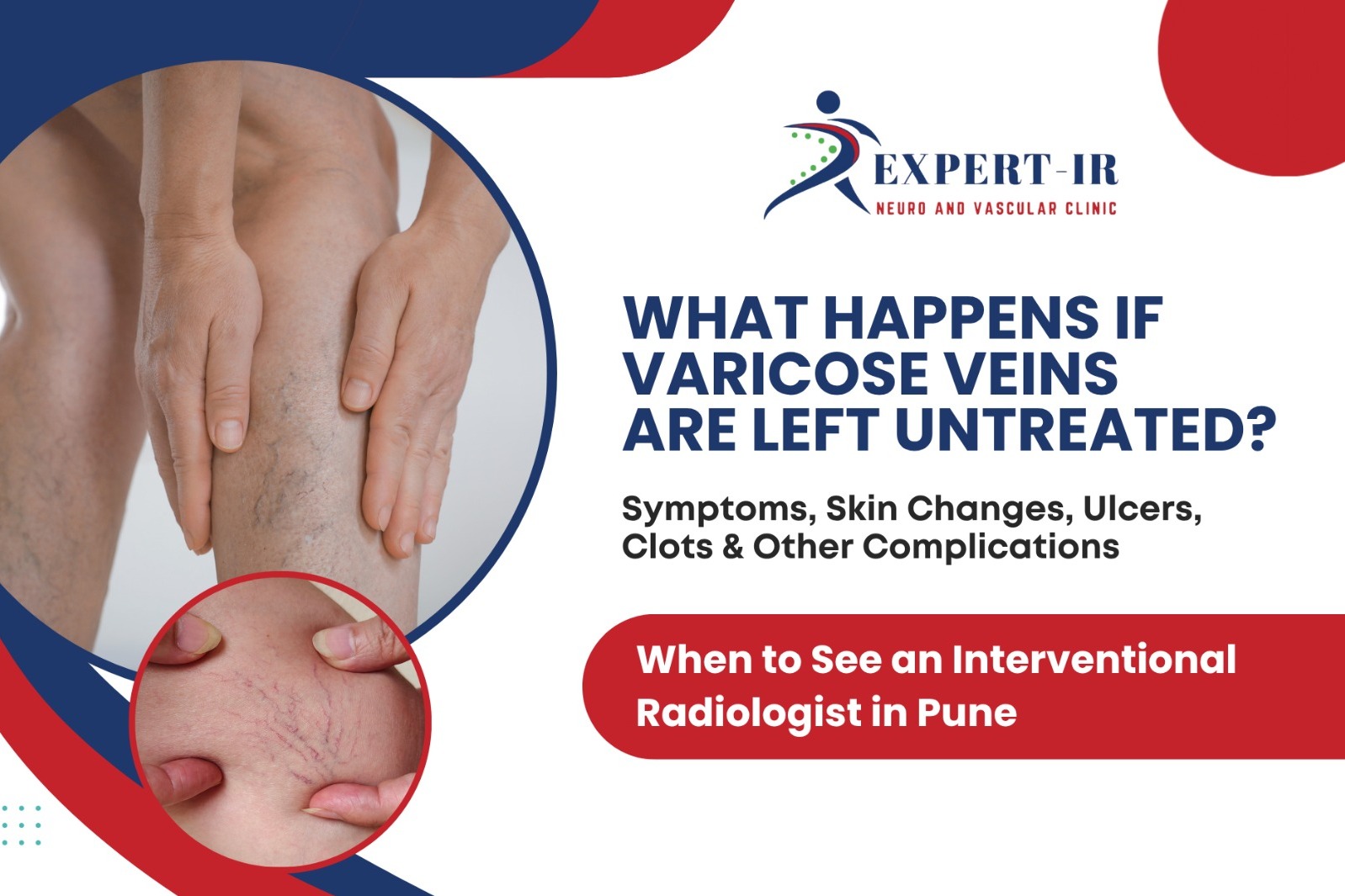
Swollen Leg Veins: Causes, Symptoms & Treatment
When Do Varicose Veins Need Medical Attention?
A Guide to Varicose Vein Treatment in Pune
Swollen leg veins show up more than people realize, and it's rarely just about how they look.
Whether it needs watching or actual treatment comes down to what's causing it underneath.
Blood moves back toward the heart through veins fitted with one-way valves. Those valves
weaken sometimes. Stop sealing properly. When that happens, blood pools in the lower legs
instead of continuing upward like it should. Give that enough time and the veins start
stretching, bulging, twisting visibly under the skin.
A handful of things push this along. Long hours standing or sitting slow circulation down,
letting blood settle in the legs. Pregnancy adds pressure. So does carrying extra weight, or
simply having a family history of weak veins. Age doesn't help either, since vein elasticity
fades gradually on its own.
Swelling rarely travels alone. There's usually aching too, or heaviness, throbbing by the end
of a long day, sometimes those bluish, rope-like veins becoming visible. Put together, these
point toward venous insufficiency more than anything temporary.
Ignoring it long-term isn't a great strategy. Weakened veins tend to get worse without
intervention, occasionally causing skin changes or, in worse cases, clots forming. Catching
this early changes the outcome considerably.
That starts with proper diagnosis. An experienced varicose veins specialist in Pune uses
ultrasound imaging to check vein function, figuring out exactly which valves are affected and
how serious the reflux is before deciding on treatment.
Schedule a consultation with Dr. Santosh Patil for an accurate diagnosis and a treatment plan
suited to your condition.
When Do Varicose Veins Need Medical Attention?
A Guide to Varicose Vein Treatment in Pune
Swollen leg veins show up more than people realize, and it's rarely just about how they look.
Whether it needs watching or actual treatment comes down to what's causing it underneath.
Blood moves back toward the heart through veins fitted with one-way valves. Those valves
weaken sometimes. Stop sealing properly. When that happens, blood pools in the lower legs
instead of continuing upward like it should. Give that enough time and the veins start
stretching, bulging, twisting visibly under the skin.
A handful of things push this along. Long hours standing or sitting slow circulation down,
letting blood settle in the legs. Pregnancy adds pressure. So does carrying extra weight, or
simply having a family history of weak veins. Age doesn't help either, since vein elasticity
fades gradually on its own.
Swelling rarely travels alone. There's usually aching too, or heaviness, throbbing by the end
of a long day, sometimes those bluish, rope-like veins becoming visible. Put together, these
point toward venous insufficiency more than anything temporary.
Ignoring it long-term isn't a great strategy. Weakened veins tend to get worse without
intervention, occasionally causing skin changes or, in worse cases, clots forming. Catching
this early changes the outcome considerably.
That starts with proper diagnosis. An experienced varicose veins specialist in Pune uses
ultrasound imaging to check vein function, figuring out exactly which valves are affected and
how serious the reflux is before deciding on treatment.
Schedule a consultation with Dr. Santosh Patil for an accurate diagnosis and a treatment plan
suited to your condition.
Keywords