What causes diabetic foot ulcers?
No single factor explains it. Most cases trace back to three things overlapping at once: poor circulation, nerve damage, and a small injury that goes unnoticed until it's already an open wound.
Nerve damage tends to be the starting point. Peripheral neuropathy dulls sensation in the feet, so a blister or pressure point doesn't register as pain the way it should. A shoe that fits slightly wrong can do real damage over weeks, and the patient often has no idea until the skin has already broken down.
Circulation makes things worse from there. When blood flow drops, frequently tied to PAD, tissue gets less oxygen and fewer nutrients. Healing that should wrap up in days instead drags on for weeks, sometimes longer.
Blood sugar itself plays an independent role too. Elevated glucose weakens immune response, which means infection sets in more easily once a wound exists. It's a large part of why something minor escalates so quickly in diabetic patients specifically.
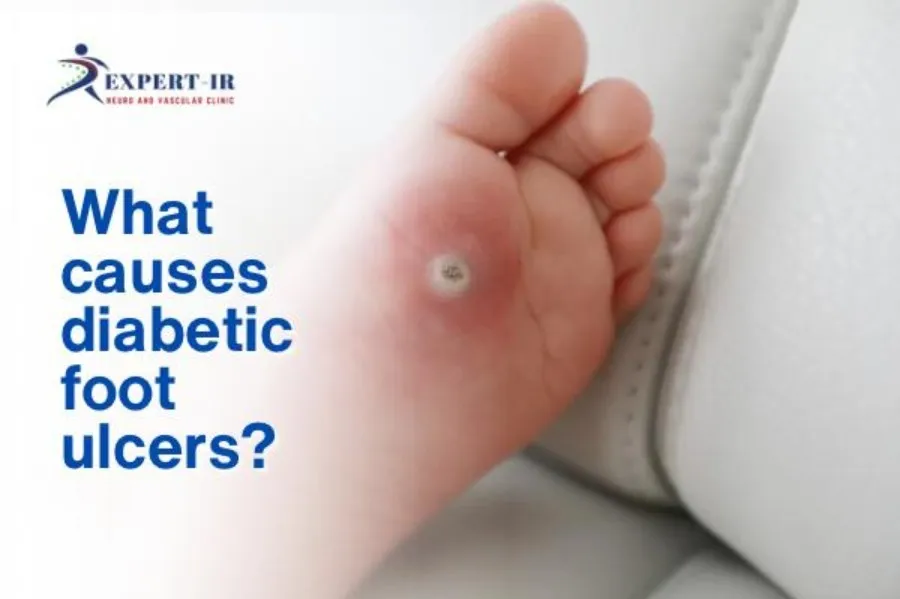
Mechanical stress adds one more layer, calluses, foot deformities, footwear that doesn't quite fit. These create pressure points on skin that's already compromised, and that's often exactly where an ulcer starts.
Circulation checkups with an interventional radiologist in Pune are increasingly recommended for diabetic patients, particularly when a wound seems to be healing slower than expected.
Daily foot checks, well fitted footwear, and consistent blood sugar control help prevent most of this. If a wound isn't healing on schedule, Dr. Santosh Patil, an interventional radiologist in Pune, can assess circulation and guide the right treatment.
No single factor explains it. Most cases trace back to three things overlapping at once: poor circulation, nerve damage, and a small injury that goes unnoticed until it's already an open wound.
Nerve damage tends to be the starting point. Peripheral neuropathy dulls sensation in the feet, so a blister or pressure point doesn't register as pain the way it should. A shoe that fits slightly wrong can do real damage over weeks, and the patient often has no idea until the skin has already broken down.
Circulation makes things worse from there. When blood flow drops, frequently tied to PAD, tissue gets less oxygen and fewer nutrients. Healing that should wrap up in days instead drags on for weeks, sometimes longer.
Blood sugar itself plays an independent role too. Elevated glucose weakens immune response, which means infection sets in more easily once a wound exists. It's a large part of why something minor escalates so quickly in diabetic patients specifically.
Mechanical stress adds one more layer, calluses, foot deformities, footwear that doesn't quite fit. These create pressure points on skin that's already compromised, and that's often exactly where an ulcer starts.
Circulation checkups with an interventional radiologist in Pune are increasingly recommended for diabetic patients, particularly when a wound seems to be healing slower than expected.
Daily foot checks, well fitted footwear, and consistent blood sugar control help prevent most of this. If a wound isn't healing on schedule, Dr. Santosh Patil, an interventional radiologist in Pune, can assess circulation and guide the right treatment.
Keywords